

writer, director, videographer, editor, sound designer
Twenty-four Mandalas
in an Apartment of Sand
EXPERIMENTAL, SHORT FILM, 24’
A vast collection of accumulated objects that reveal attachments, desires, fears, beliefs, values, and compulsions experienced over eighty-two years of life. Step by step, stumble by stumble, facing the physical and emotional challenge, closets are emptied, and a museum is established on the floor, organized—both objectively and subjectively—by categories.
In this landscape of fullness and emptiness, of absence and presence, I create a farewell ritual permeated by challenges. How can I detach from your attachments, Father? How can I avoid disrespecting your life's construction? How can I let go of the inheritance of these attachments? The poetic nature that permeates the space and the objects shows me the way.
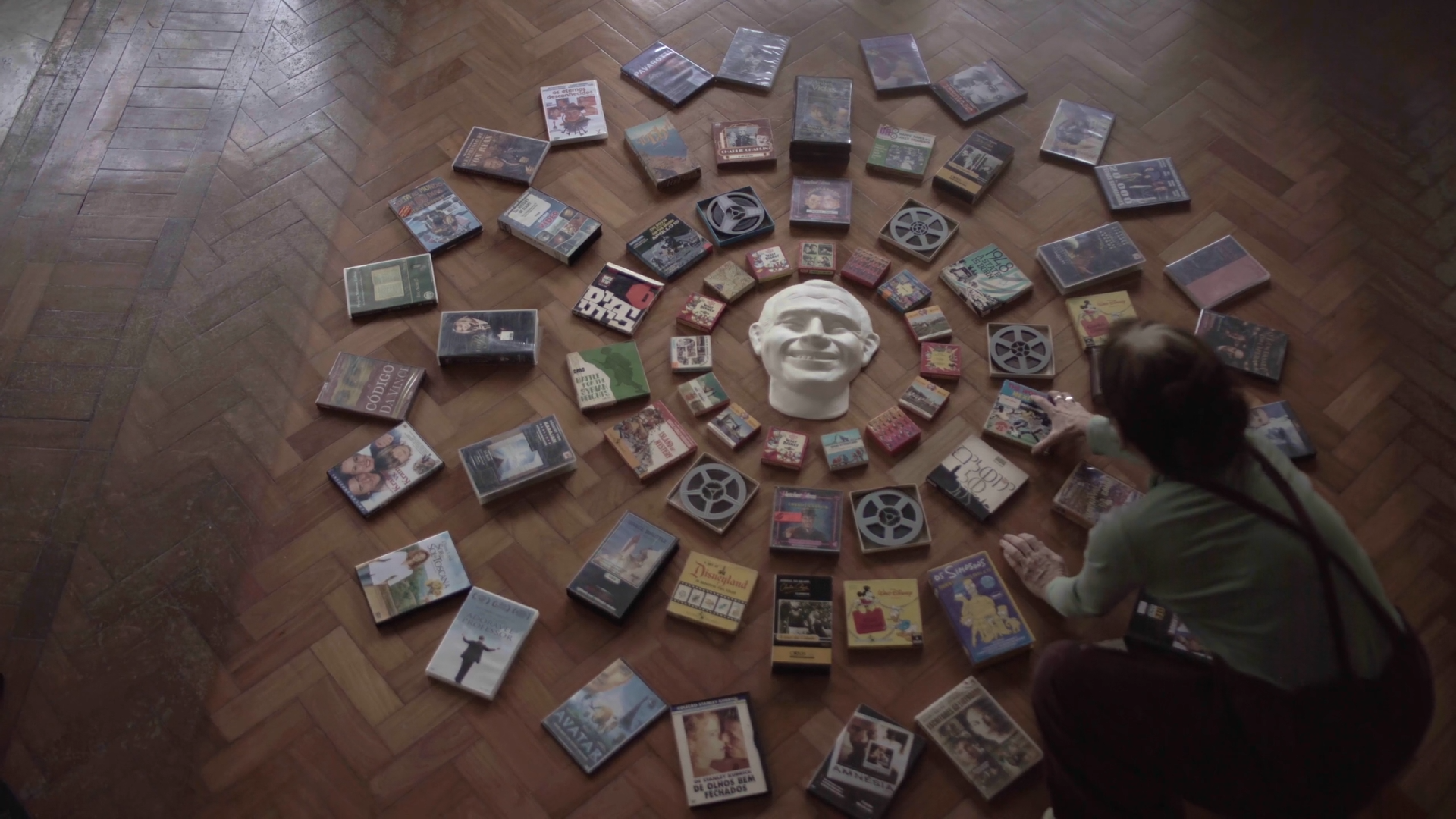
By separating the objects into categories, I perceive their meanings and decide to compose thematic mandalas. Each is given a title that translates the concept revealed during its creation. At the epicenter of them all lies a plaster sculpture of my father’s smiling face, made during his time at the School of Fine Arts over thirty years ago.
Around the sculpture, I arrange the objects in successive layers. Upon their completion, photography ensures the preservation of what will soon be undone. In this expressive process, I sense a profanation. I ask for permission. I move forward.
In Sanskrit, Mandala means circle; in the Tibetan tradition, it is a ritual geometric diagram used as a tool for thought and concentration, also symbolizing a sacred abode—the palace of a deity. Monks create mandalas to symbolize the cycle of life and death, and it takes years of preparation and training to gain the skill and knowledge to paint one. Its construction, where the design is ritually filled with colored sand, is later destroyed by the wind or swept away as a representation of life’s impermanence.
For Carl Jung, mandalas are movements toward psychological growth, expressing the idea of a safe haven, of inner reconciliation; their construction functions as a path of restoration.
Returning to the photographs of the mandalas while composing this work, I realize that by placing the figure of my father at the center of this growing circular composition, I made this gesture a tool for thought—one that, like a mantra, welcomed me into my own 'sacred abode.'
A constructive action arose amidst the deconstruction that moved through me. A new nest was formed in the old, undone house, cradling me and helping me process the brutal encounter with death as the mandalas revealed themselves, in their own circularity, as the rebirth of a vital gesture. In this safe haven, as Jung understood it, I found inner reconciliation and discovered a path of restoration.
To the ritual gesture—aesthetic, spiritual, and therapeutic—of constructing the mandalas, photography is added. Like 'a sublime fragment between the sensible and the intelligible,' it stands in this short film between memory and hope.